الگوی تربیت اخلاقی دانشآموزان ابتدایی شهر تهران با رویکرد آمیخته
کلمات کلیدی:
تربیت اخلاقی, دانش آموزان ابتدایی, شناختی, عاطفی, اجتماعی, فرهنگی, زیست محیطیچکیده
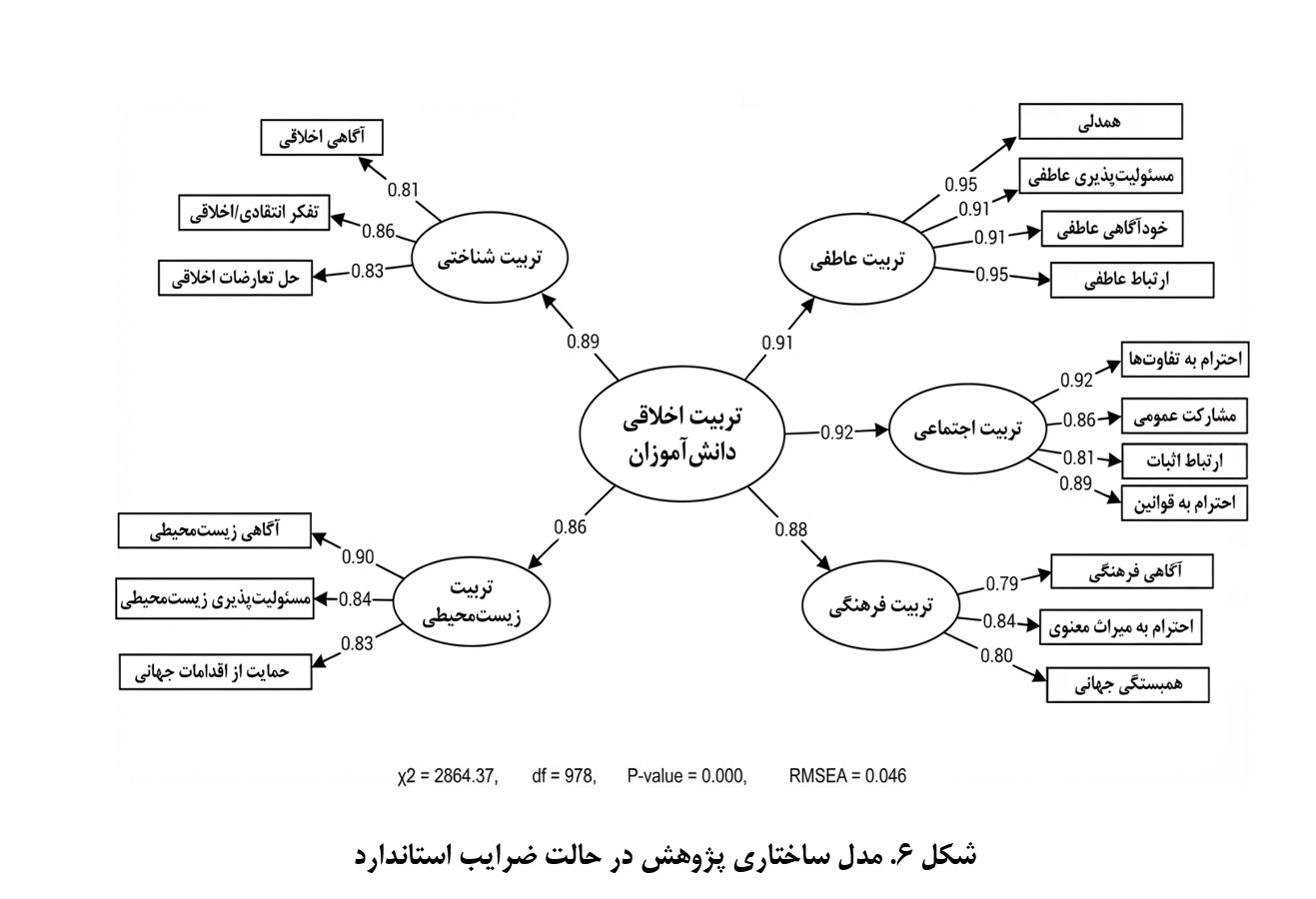
پژوهش حاضر با هدف طراحی و اعتبارسنجی الگوی تربیت اخلاقی دانشآموزان دوره ابتدایی شهر تهران انجام شد. این پژوهش از نظر هدف کاربردی و از نظر رویکرد، آمیخته اکتشافی کیفی–کمی بود. در بخش کیفی، جامعه پژوهش را اساتید دانشگاه و خبرگان حوزه مدیریت آموزشی تشکیل دادند که ۱۲ نفر از آنان با روش نمونهگیری هدفمند تا رسیدن به اشباع نظری انتخاب شدند. دادههای کیفی از طریق مصاحبه نیمهساختاریافته گردآوری و با استفاده از کدگذاری باز، محوری و انتخابی و فن دلفی تحلیل شدند. در بخش کمی، جامعه آماری شامل ۳۵۲۵ معلم دوره ابتدایی شهر تهران دارای مدرک کارشناسی و بالاتر بود که از میان آنان ۳۴۷ نفر بر اساس جدول مورگان و به روش تصادفی انتخاب شدند. ابزار بخش کمی، پرسشنامه محققساخته حاصل از مرحله کیفی بود که ضریب آلفای کرونباخ کل آن ۰٫۸۸ بهدست آمد. دادهها با استفاده از تحلیل عاملی تأییدی و مدلسازی معادلات ساختاری در نرمافزار LISREL تحلیل شدند. تحلیل کیفی به شناسایی ۵ بعد، ۱۷ مؤلفه و ۸۸ شاخص منجر شد. ابعاد اصلی الگو شامل تربیت شناختی، عاطفی، اجتماعی، فرهنگی و زیستمحیطی بودند. نتایج تحلیل عاملی تأییدی نشان داد روابط میان شاخصها و سازههای مربوط به هر پنج بعد از نظر آماری معنادار بود (p<0.001). همچنین مدل ساختاری نهایی از برازش مطلوبی برخوردار بود؛ بهطوریکه نسبت χ²/df برابر با ۲٫۹۳، RMSEA حدود ۰٫۰۴۷، CFI و IFI برابر با ۰٫۹۴، RFI برابر با ۰٫۹۲، GFI برابر با ۰٫۹۱ و AGFI برابر با ۰٫۹۰ بهدست آمد. این شاخصها اعتبار ساختاری و کفایت مدل پیشنهادی را تأیید کردند. الگوی پنجبعدی ارائهشده، تربیت اخلاقی دانشآموزان ابتدایی را بهعنوان فرایندی چندبعدی و یکپارچه تبیین میکند و میتواند چارچوبی معتبر برای طراحی برنامههای آموزشی، تدوین محتوای تربیتی و سیاستگذاری در مدارس ابتدایی فراهم سازد.
دانلودها
مراجع
1. Rahnama A. An Introduction to Moral Education: Philosophical and Psychological Foundations, Approaches, and Methods of Moral Education. Tehran: Aeezh Publications; 2021.
2. Aghili SR, Elm al-Hoda J, Fathi Vajargah K. An Analysis of the Principles Governing the Design of an Optimal Moral Education Curriculum Model in the Primary Education Level of the Iranian Educational System. Educational Sciences. 2019;26(1):15-34. doi: 10.22055/edus.2019.26634.2585.
3. Abbasi D, Maleki H, Beheshti S. Designing a Moral Education Model in Higher Education Based on the Ethical Teachings of the Holy Qur'an from the Perspective of Tafsir al-Mizan Using Grounded Theory. New Educational Thoughts. 2019;15(2):99-122.
4. Heydarizadeh S, Esmaeili Z, Farajollahi M, Safaei T. Design and Validation of a Moral Education Model Appropriate to the Characteristics of Iranian Primary School Students with Emphasis on the Fundamental Transformation Document of Education. Research in Educational Systems. 2018;12(Special Issue):231-47.
5. Safarpour Feyzi M. Examining the Components of Moral Education in Thinking and Lifestyle Textbooks of Lower Secondary Education. Research in Art and Humanities. 2019;4(23):71-6.
6. Afzalkhani M. Content Analysis of Thinking and Lifestyle Textbooks in Lower Secondary Education from the Perspective of Moral Education. Thinking and Children. 2022;13(1):91-115.
7. Majdaldin T, Mirdamadi SM, Sarmadi MR. Designing a Model of Students' Moral Development within the Framework of the Philosophy of Islamic Education. Research in Islamic Education Issues. 2023;31(60):181-202.
8. Bagherianfar M, Dolati AA, Abdollahi N. Indicators of a Creative Classroom in Primary Education and the Degree of Attention Paid to Them by Pre-Service Student Teachers. Scientific Journal of Innovation and Creativity in Human Sciences. 2025;15(1):1-29.
9. Yaghoubi A, Moradiani F, Rasoul K. The Effect of Positive Thinking Skills Training on Creative Thinking, Outcome Expectations, and Irritability of Teachers. Scientific Journal of Innovation and Creativity in Human Sciences. 2025;14(4):164-88.
10. Salamah N. Curriculum Management to Shape Students' Competence in Knowledge, Religious Values, and Morals. Journal of Education and Learning Innovation. 2025;2(1):1-15. doi: 10.59373/jelin.v2i1.90.
11. Rohim A, Madzaly MYA. Analysis of Evaluation Techniques in the Book "Islamic Religious Education and Ethics" for Eleventh Grade Students of Madrasah Aliyah. Edukasi Islami Jurnal Pendidikan Islam. 2025;14(01):67-86. doi: 10.30868/ei.v14i01.8054.
12. Golshan A, Azimi M, Sadeghzadeh Balil N. Representation of Moral Education Components in Primary School Textbooks: A Meta-Synthesis Study. Qualitative Research in Educational Sciences. 2025;1(4):84-114.
13. Salehi M, Najafi A. Identifying Components Affecting Moral Education in the Content of Primary School Textbooks. Education, Training and Sustainable Development. 2025;1(3):18-27.
14. Koushi Z, Mousapour N, Armand M, Mohebbi A. Design and Validation of a Moral Education Model in the Primary Education Level of the Educational System of the Islamic Republic of Iran. 2020.
15. Tabatabaei Yazdi H. Design and Validation of a Moral Education Model in the Primary Education Level of the Iranian Educational System. Tenth National Conference on New Developments in Positive Psychology; Bandar Abbas2023.
دانلودها
چاپ شده
شماره
نوع مقاله
مجوز
حق نشر 2026 الهام دوخایی (نویسنده); بهارک شیرزاد کبریا (نویسنده مسئول); عباس خورشیدی, فاطمه حمیدی فر (نویسنده)

این پروژه تحت مجوز بین المللی Creative Commons Attribution-NonCommercial 4.0 می باشد.