طراحی مدل مشارکت اکوسیستمی مدرسه، خانواده و جامعه برای ارتقای سرمایه روانشناختی دانشآموزان دوره ابتدایی
کلمات کلیدی:
مشارکت اکوسیستمی مدرسه, خانواده, جامعه, سرمایه روانشناختی دانشآموزان, مدارس ابتدایی, شهر تهرانچکیده
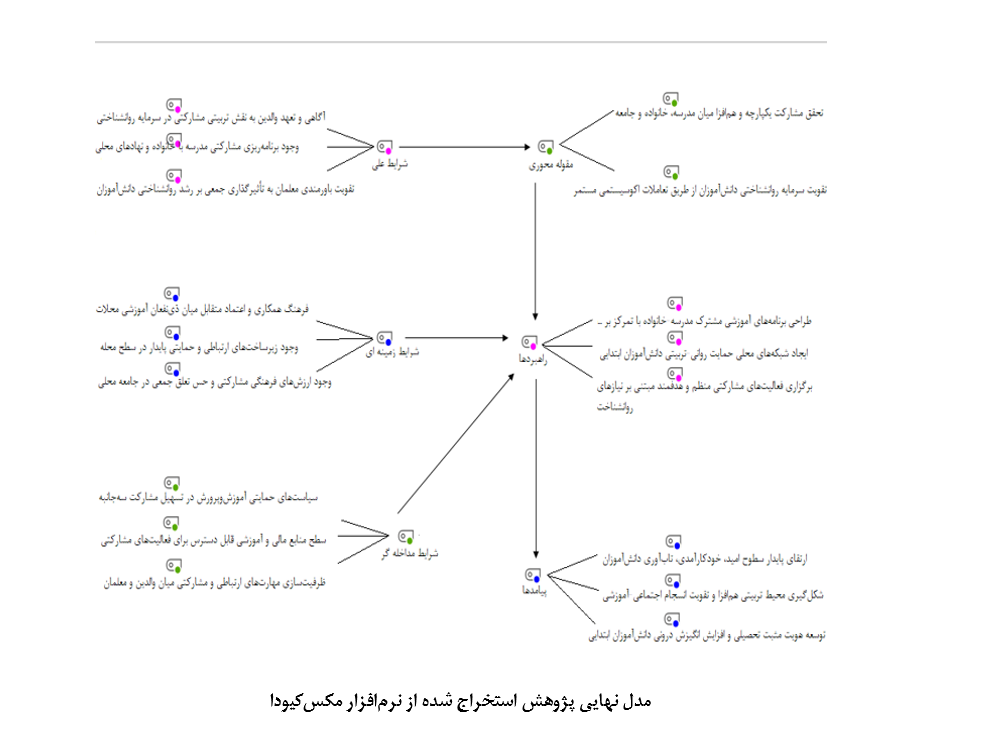
پژوهش حاضر با هدف طراحی مدل مشارکت اکوسیستمی مدرسه، خانواده و جامعه برای ارتقای سرمایه روانشناختی دانشآموزان دوره ابتدایی انجام شد. این پژوهش با رویکرد کیفی و بر مبنای نظریه دادهبنیاد انجام شد. جامعه پژوهش شامل استادان دانشگاه، کارشناسان و خبرگان دارای دانش نظری یا تجربه عملی در زمینه مشارکت مدرسه، خانواده و جامعه و سرمایه روانشناختی دانشآموزان بود. مشارکتکنندگان با استفاده از نمونهگیری هدفمند انتخاب شدند و نمونهگیری تا دستیابی به اشباع نظری ادامه یافت؛ بهگونهای که پس از انجام مصاحبه با 21 نفر، داده جدیدی به دست نیامد. دادهها از طریق مصاحبههای عمیق نیمهساختاریافته گردآوری و براساس الگوی استراوس و کوربین، طی مراحل کدگذاری باز، محوری و انتخابی تحلیل شدند. اعتبار یافتهها نیز با استفاده از معیارهای اعتبارپذیری، اطمینانپذیری، تأییدپذیری و انتقالپذیری بررسی شد. تحلیل دادهها به استخراج 240 کد باز، 51 کد محوری و 18 کد انتخابی منجر شد. شرایط علّی شامل آگاهی و تعهد والدین، برنامهریزی مشارکتی مدرسه و باور معلمان به تأثیرگذاری جمعی بود. پدیده محوری در قالب مشارکت یکپارچه و همافزای مدرسه، خانواده و جامعه و تقویت سرمایه روانشناختی از طریق تعاملات مستمر اکوسیستمی شکل گرفت. فرهنگ همکاری، زیرساختهای ارتباطی و ارزشهای مشارکتی بهعنوان شرایط زمینهای و سیاستهای حمایتی، منابع مالی و آموزشی و ظرفیتهای ارتباطی بهعنوان شرایط مداخلهگر شناسایی شدند. راهبردهای مدل شامل طراحی برنامههای آموزشی مشترک، ایجاد شبکههای محلی حمایت روانیـتربیتی و اجرای فعالیتهای مشارکتی منظم بود. پیامدهای مدل نیز ارتقای امید، خودکارآمدی و تابآوری، تقویت انسجام اجتماعیـآموزشی، توسعه هویت تحصیلی مثبت و افزایش انگیزش درونی دانشآموزان بود. ارتقای سرمایه روانشناختی دانشآموزان ابتدایی نیازمند مشارکتی ساختاریافته، مستمر و همافزا میان مدرسه، خانواده و جامعه است. اجرای مدل پیشنهادی میتواند چارچوبی بومی برای سیاستگذاری آموزشی، طراحی مداخلات مشترک و تقویت محیطهای تربیتی حمایتگر فراهم کند.
دانلودها
مراجع
1. Toumaj A, Mohammadifar MA, Tale Pasand S. The Relationship of Media Literacy and Psychological Capital with Students' Academic Engagement: Testing the Mediating Role of Social Cognition. Quarterly Journal of Psychology. 2025(115):443-53.
2. Nemati S, Badri Gargari R, Vahedi S, Boroumandzadeh N. Positive Psychology-Oriented Constructs in the Domain of Specific Learning Disabilities: A Systematic Review. Quarterly Journal of Exceptional Individuals Psychology. 2025(57):293-319.
3. Loghman S, Quinn M, Dawkins S, Woods M, Om Sharma S, Scott J. A Comprehensive Meta-Analysis of the Nomological Network of Psychological Capital. Journal of Leadership & Organizational Studies. 2022;30(1):108-28. doi: 10.1177/15480518221107998.
4. Nemati M, Shomali Oskouei A, Saberi H. The Mediating Role of Academic Self-Efficacy in the Relationship between Psychological Capital and Academic Procrastination among Students. Islamic Lifestyle with a Focus on Health. 2022;6(3):321-32.
5. Roudgarian M, Zameni F, Rasouli SE. The Effects of Self-Efficacy and Psychological Capital on Test Anxiety among Upper Secondary School Students in Babol. Journal of Mashhad University of Medical Sciences. 2021;64(5):4175-85.
6. Besharati Pour M, Hajiyakhchali A, Shehni Yailagh MSY, Maktabi G. The Effect of Psychological Capital Training on Students' Academic Engagement and Positive Emotions. Journal of Applied Psychological Research. 2024;15(3):139-59.
7. Mobaraki S, Rostami Asl S, Ghassabi Kohneshahri S, Asadi Soltanahmadi S. Psychological Capital and Its Role in Students' Academic Motivation. Sexual and Psychological Disorders. 2024;2(3).
8. Chen PL, Lin CH, Lin IH, Lo CO. The Mediating Effects of Psychological Capital and Academic Self-Efficacy on Learning Outcomes of College Freshmen. Psychological Reports. 2023;126(5):2489-510. doi: 10.1177/00332941221077026.
9. Carter JW, Youssef-Morgan C. Psychological Capital Development Effectiveness of Face-to-Face, Online, and Micro-Learning Interventions. Education and Information Technologies. 2022;27(5):6553-75. doi: 10.1007/s10639-021-10824-5.
10. Finch J, Waters AM, Farrell LJ. Developing the HERO Within: Evaluation of a Brief Intervention for Increasing Psychological Capital in Australian Female Students during the Final Year of School in the First Year of COVID-19. Journal of Affective Disorders. 2023;324:616-23. doi: 10.1016/j.jad.2022.12.169.
11. Hosseini Tabaghdahi L, Mahmoudi F, Yaghoubi AS. The Effectiveness of Cognitive Emotion-Regulation Strategy Training in Increasing the Subjective Vitality of Lower Secondary School Students. Quarterly Journal of Health Promotion. 2024;23(5):18-33.
12. Slåtten T, Lien G, Batt-Rawden VH, Evenstad SBN, Onshus T. The Relationship between Students' Psychological Capital, Social-Contextual Factors and Study-Related Outcomes: An Empirical Study from Higher Education in Norway. International Journal of Quality and Service Sciences. 2023;15(1):17-33. doi: 10.1108/IJQSS-11-2021-0160.
13. Peng JC, Chen SW. Learning Climate and Innovative Creative Performance: Exploring the Multilevel Mediating Mechanism of Team Psychological Capital and Work Engagement. Current Psychology. 2022. doi: 10.1007/s12144-021-02617-3.
14. Cai W, Yao H. The Effect of Parental Psychological Capital on Young Children's Social Skills Based on Structural Equation Modelling. Applied Mathematics and Nonlinear Sciences. 2023;9(1). doi: 10.2478/amns.2023.2.00957.
15. Ahghar G, Afrooz G, Akbari Zardkhaneh S. Designing a Family-Centered Psychological Strategies Model and Evaluating Its Effectiveness on the Spiritual Vitality of Upper Secondary School Students. Adolescent and Youth Psychological Studies. 2023;4(5):1-23.
16. Cui T, Wang C, Liu Q, Liu J. Domains of Parental Involvement and Academic Achievement across Grade Levels in the Chinese Context. Asia Pacific Journal of Education. 2023:1-17. doi: 10.1080/02188791.2023.2256989.
17. Tighbakhsh S, Baghi N, Mokhtari Z, Khodadoust M, Nik Ardestani M, Heydari Dehabadi K. Predicting Professional Engagement among Elementary School Teachers in Shiraz Based on Their Psychological Capital and Self-Efficacy. Quarterly Journal of Psychology and Educational Sciences. 2025;11(4):1-15.
18. Da Y, Ma Z, Gao Y. Psychological Capital as a Mediator in the Link between Organizational Socialization and Job Performance in Chinese Higher Education Teachers. Sustainability. 2024;16(13):5668. doi: 10.3390/su16135668.
19. Manafi B, Saroukhani B, Aghajani Marsa H. Designing a Strategic Model of Effective Communication between Family and School. Strategic Communication Studies. 2023;3(2).
20. Shoushtari A, Khazami P. A Framework for Parent-School Engagement through the Integration of Related Factors and Processes. New Research in Education. 2024;5(1).
21. Chu M, Fang Z, Mao L, Ma H, Lee CY, Chiang YC. Creating a Child-Friendly Social Environment for Fewer Conduct Problems and More Prosocial Behaviors among Children: A LASSO Regression Approach. Acta Psychologica. 2024;244:104200. doi: 10.1016/j.actpsy.2024.104200.
22. Alborzi M, Khoshbakht F, Ahmadi Fariabadi A. Examining Strategies to Enhance Students' Sense of Social Belonging and Learning Motivation in Virtual Education from Teachers' Perspectives: A Qualitative Study. Research in Educational Systems. 2022;16(59):61-74.
23. Masoumi N, Zabardast O, Mousavi SV, Rezaei S. The Effect of Teaching Persian Using Gagné's Instructional Design Model on Phonological Awareness and Problem-Solving Performance of Educable Students with Intellectual Disabilities. Quarterly Journal of Exceptional Individuals Psychology. 2024(56):191-211.
24. Feng T, Wang B, Mi M, Ren L, Wu L, Wang H, et al. The Relationships between Mental Health and Social Media Addiction, and between Academic Burnout and Social Media Addiction among Chinese College Students: A Network Analysis. Heliyon. 2025;11(3). doi: 10.1016/j.heliyon.2025.e41869.
25. Fei J, Hu Y, Liang L, Meng C, Mei S. Exploring the Impact of Emotional and Cognitive Factors on Anxiety Symptoms of Chinese Adolescents: A Serial Mediation Study. International Journal of Mental Health and Addiction. 2023. doi: 10.1007/s11469-022-01004-8.
دانلودها
چاپ شده
شماره
نوع مقاله
مجوز
حق نشر 2025 Mona Voshagh, Hamid Shafizadeh, Fakhreddin Ahmadi, Narges Shariatmadari (Author)

این پروژه تحت مجوز بین المللی Creative Commons Attribution-NonCommercial 4.0 می باشد.