طراحی و اعتباریابی الگوی برنامه درسی مبتنی بر حقوق کودک در نظام تربیت معلم: مطالعه موردی دانشگاه فرهنگیان
کلمات کلیدی:
طراحی و اعتباریابی , الگوی برنامه درسی , نظام تربیت معلم , دانشگاه فرهنگیانچکیده
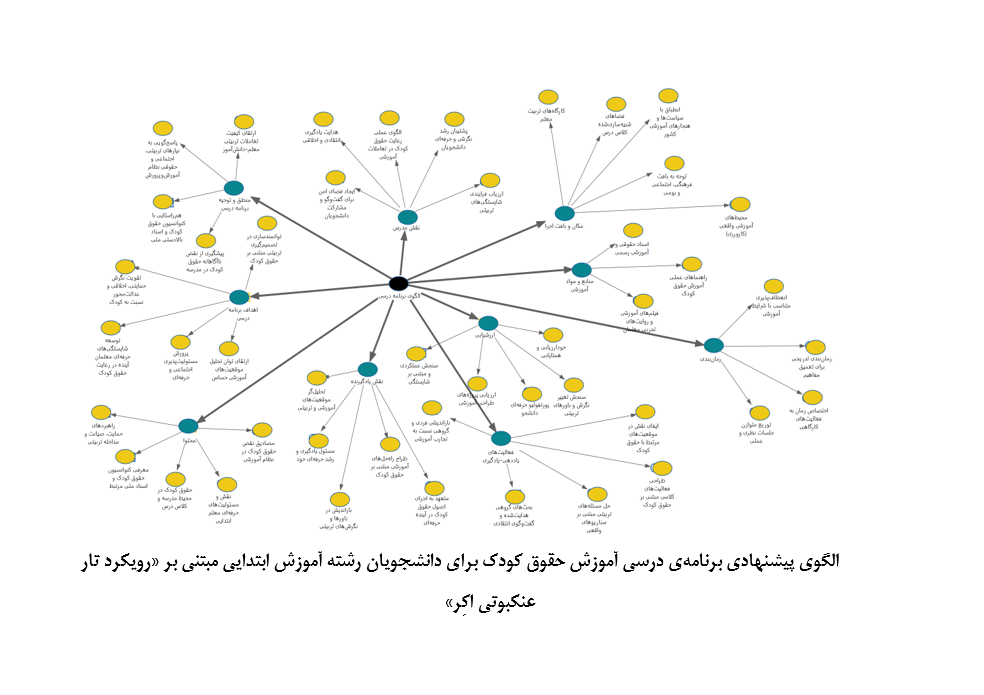
پژوهش حاضر با هدف طراحی و اعتباریابی الگویی جامع برای برنامه درسی مبتنی بر حقوق کودک در نظام تربیت معلم دانشگاه فرهنگیان انجام شد. این پژوهش از نظر هدف کاربردی و از نظر روش، آمیخته اکتشافی متوالی بود که در سه مرحله انجام شد. در مرحله نخست، با استفاده از روش فراترکیب، 34 پژوهش مرتبط تحلیل و مؤلفههای اولیه الگو استخراج شد. در مرحله دوم، مصاحبههای نیمهساختاریافته با 11 نفر از استادان دانشگاه، متخصصان برنامهریزی درسی و حقوقدانان که به روش هدفمند و گلولهبرفی انتخاب شده بودند، تا دستیابی به اشباع نظری انجام شد. دادههای کیفی با تحلیل مضمون و کدگذاری باز، تطبیقی و طبقهبندیشده تحلیل شدند. روایی محتوایی مؤلفهها با استفاده از روش لاوشه و نظر 15 متخصص بررسی شد. در مرحله کمی، پرسشنامه محققساخته در میان 201 نفر از مدیران مدارس، معلمان و کارشناسان برنامه درسی فارغالتحصیل دانشگاه فرهنگیان اجرا و الگوی پیشنهادی با مدلسازی معادلات ساختاری مبتنی بر حداقل مربعات جزئی در نرمافزار SmartPLS 3 اعتباریابی شد. فراترکیب به شناسایی 26 مقوله میانی در شش عامل اصلی منجر شد. تحلیل مصاحبهها نیز 37 مؤلفه را در قالب ده عنصر شامل منطق و چرایی، اهداف، محتوا، یاددهی–یادگیری، نقش مدرس، نقش یادگیرنده، مواد و منابع، ارزشیابی، زمانبندی، و مکان و بافت اجرا آشکار ساخت. تمام مؤلفهها از روایی محتوایی مطلوب برخوردار بودند و ضریب کلی نسبت روایی محتوا 0.847 به دست آمد. ضرایب آلفای کرونباخ و پایایی ترکیبی همه سازهها بیشتر از 0.70 و مقادیر میانگین واریانس استخراجشده بیشتر از 0.50 بود؛ بنابراین، پایایی درونی و روایی همگرای الگو تأیید شد. شاخص برازش کلی 0.328 نیز برازش مناسب الگوی ساختاری را نشان داد. الگوی اعتباریابیشده میتواند چارچوبی منسجم برای بازطراحی برنامههای تربیت معلم فراهم کند و از طریق تلفیق عدالت آموزشی، کرامت و امنیت کودک، مشارکتجویی، آموزش مستقیم حقوق و مهارتهای شهروندی، دانشجومعلمان را برای ایجاد محیطهای یادگیری ایمن، فراگیر، مشارکتی و حقوقمحور آماده سازد.
دانلودها
مراجع
1. Salimi J, Ghobadi A, Amini Bagh A. A Phenomenographic Study of Teachers' Understanding and Perception of the Concepts of Curriculum and Curriculum Planning. Curriculum and Learner-Centered Instruction. 2025;4(2):109-35. doi: 10.22034/cipj.2025.65834.1228.
2. Nasrollahi-Kalroud R, editor The Role of Curriculum Planning in Advancing Educational Goals. National Conference on Humanities with a Modern Approach; 2024.
3. Saghaholeslami A. Curriculum Planning and Development of Educational Syllabi for Research Ethics. Ethics in Science and Technology. 2023;18(3):92-101.
4. Ahmadi V, Mousapour N, Baharvand Z. Evaluation of the Efficiency of the Master's Program in Curriculum Planning at Farhangian University. Theory and Practice in Teacher Education. 2024;10(17):207-22.
5. Shaban M. Analysis of the Structure of Children's Rights in Iran: Examining the National Authority of the Convention on the Rights of the Child Based on the International Convention on the Rights of the Child. Legal Civilization. 2021;4(9). doi: 10.22034/lc.2022.134888.
6. Mahjoub S. The Child's Right to Support and Its Methodology in the Convention on the Rights of the Child and the Iranian Legal System. Philosophy of Law. 2023;2(1):141-66. doi: 10.22081/phlq.2024.68240.1050.
7. Azarpandar A. The Approach of the European Court of Human Rights in Explaining the Concept of the Best Interests of the Child in Relation to the Right to Family Life in Asylum Case Law. International Law Journal. 2025:e725466. doi: 10.22066/cilamag.2025.2058966.2729.
8. Kashi Komijani M, Rajaei M. A Comparative Study of Children's Right to Education from the Perspective of the Convention on the Rights of the Child and Iranian Constitutional Law. Comparative Public Law. 2024;1(2):111-30.
9. Moody Z. Children's Rights to, in and through Education: Challenges and Opportunities. Centre for Children's Rights Studies, University of Geneva, 2021.
10. Azimi M. A Critical Analysis of Children's Rights in Iranian Educational Content. Journal of Curriculum Studies. 2022;14(3):57-80.
11. Sabzeh B, Bazgir T, Samipour M. Content Analysis of Elementary School Textbooks Based on Components of Children's Rights. Social Welfare. 2025;25(99):211-28. doi: 10.32598/refahj.25.99.4670.1.
12. Ghaderi M, Vafadar Z. Analysis of Educational Content on Children's Rights in the Official Curriculum. Education, Training and Sustainable Development. 2023;1(3):35-43.
13. Devsalar MAGM, Mohammad, editors. Content Analysis of the Sixth-Grade Social Studies Book Based on Attention to the Education of Children's Rights. Seventh National Conference on New Approaches in Education and Research; 2021.
14. Javanmard Q, Sepehrinia. Investigating the Level of Attention to Educational Rights Components in Social Studies Textbooks for the Second Year of Primary School. Journal of Higher Education. 2022;2(1):105-14. doi: 10.30495/ee.2022.1960491.1098.
15. Tafreshinejad A, Ghanbari A, Atiyeh. Examining the Level of Attention Paid to Child Rights Components in the Fifth-Grade Elementary School Textbook. Quarterly Journal of Teaching and Learning Research, Bojnourd Azad University. 2023;18(76). doi: 10.30495/educ.2023.1980386.2960.
16. Yarigholi B, Abbasi Choubtarash M, Abbasi S. The Status of the Components of the Right to Education in Elementary School Textbooks. Socio-Cultural Strategy. 2019;8(1):299-323.
17. Akcan E, Bakır KF. An Analysis of the Texts in the Life Studies Textbooks in the Context of the United Nations Convention on the Rights of the Child. Journal of Educational Research and Practice. 2023;13(1):3. doi: 10.5590/JERAP.2023.13.1.03.
18. Akman B. Examining the Children's Perceptions of Child Rights. Elementary Education Online. 2021;20(1). doi: 10.17051/ilkonline.2021.01.012.
19. Polatlar DY, Oztabak MÜ. The Analysis of Picture Storybooks Aimed at Pre-School Children in Terms of Child Rights Violations. Educational Research and Reviews. 2021;16(11):407-17.
20. Shoja-Sangchouli M. Children's Right to Privacy in Iranian Positive Law and the Convention on the Rights of the Child. Law and New Studies. 2020;1(1):61-77.
21. Salami S, Zare Esfandani Z, Hasani S, Motamednejad R. The Right to Children's Mental Health in Cyberspace in Light of the Legal System of Iran, Islam, and International Human Rights Instruments. Islamic Law Research Journal. 2022;23(1):131-60. doi: 10.30497/law.2022.242124.3142.
22. Hosseini SM, Fathi Vajargah K, Haghani M, Arefi M, Rezaeizadeh M. The Place of Virtual Citizenship Education in Official Elementary School Curricula in Iran's Educational System. Educational Sciences. 2021;28(1):229-52.
23. Mansouri F, Ghazanfari N, editors. A Review of Curriculum Planning Strategies Centered on Mental Health in Childhood and Adolescence. Third International Conference on Modern Research in the Educational System and Educational Sciences; 2025.
24. Dousti S, Asadian C, Piri M. Analysis of the Sixth-Grade Elementary Curriculum from the Perspective of Attention to Students' Educational Rights from the Viewpoint of Teachers and Students. Research in Curriculum Planning. 2020;17(37):167-77.
25. Tahmasbzadeh Sheikhlar D, Fattahi Merkid M, Imanzadeh A. Identifying the Components of Economic Education in the Holy Qur'an and the Extent of Their Reflection in Upstream Documents. Applied Issues in Islamic Education. 2022;7(1):91-122. doi: 10.52547/qaiie.7.1.91.
26. Tahmasbzadeh Sheikhlar D, Teymouri L, Imanzadeh A. Comparing the Dimensions and Components of Children's Rights in the International Convention with the Upstream Documents of the Educational System of the Islamic Republic of Iran. Applied Issues in Islamic Education. 2022;7(4):59-86. doi: 10.52547/qaiie.7.4.59.
27. Abdullah A, Huynh I, Emery CR, Jordan LP. Social Norms and Family Child Labor: A Systematic Literature Review. International Journal of Environmental Research and Public Health. 2022;19(7):4082.
28. Bakhshi R. Teachers' Perceptions of Children's Rights Education: A Case Study in Tehran. Iranian Journal of Educational Policy. 2023;11(1):33-49.
29. Aghabigi A, Aghabigi F. Citizenship Rights and the Necessity of Teaching Them: The Role of Teachers and the Educational System in Teaching Citizenship Rights. Citizenship Rights Studies. 2020;14(4):399-418.
30. Ranjkesh M, Mahdipour Z. Drawing Up the Charter of Ethics and Citizenship Rights in Iranian Educational Organizations and Examining the Rights of Students and Teachers. Studies in Psychology and Educational Sciences. 2020;50(4):59-68.
31. Soltani M, Moradi S, Gholizadeh-Bafrajerd M. Designing an Elementary Curriculum Model Based on Teaching Children's Rights in Society and the Family. Psychology and Educational Sciences in the Third Millennium. 2020;1(1):9-23.
32. Sadeghi M. The Challenges of Human Rights Education in Iran's National Curriculum. Human Rights Education Review. 2021;4(1):54-73.
دانلودها
چاپ شده
شماره
نوع مقاله
مجوز
حق نشر 2025 Farzaneh Moshfeghiyan (Author); Hossein Baghaei (Corresponding author)

این پروژه تحت مجوز بین المللی Creative Commons Attribution-NonCommercial 4.0 می باشد.