مدلیابی روابط ساختاری پذیرش فناوری و سبک زندگی دیجیتال با اشتیاق کاری کارکنان: نقش میانجی تعهد سازمانی
کلمات کلیدی:
پذیرش فناوری, سبک زندگی دیجیتال, اشتیاق کاری, تعهد سازمانی, مدلیابی معادلات ساختاریچکیده
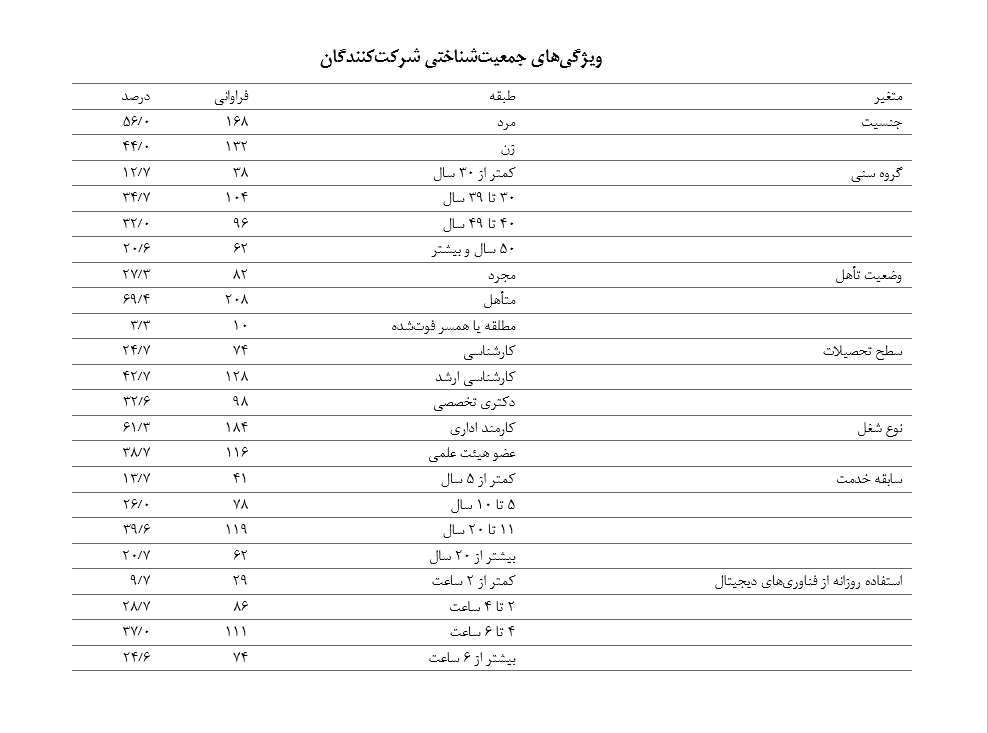
پژوهش حاضر با هدف بررسی روابط ساختاری پذیرش فناوری و سبک زندگی دیجیتال با اشتیاق کاری کارکنان و تعیین نقش میانجی تعهد سازمانی انجام شد. این پژوهش از نظر هدف کاربردی، از نظر رویکرد کمی و از نظر روش، توصیفی-همبستگی و مبتنی بر مدلیابی معادلات ساختاری بود. جامعه آماری شامل اعضای هیئت علمی و کارکنان اداری دانشگاههای آزاد اسلامی استان سمنان در سال ۱۴۰۳ بود که از میان آنان ۳۰۰ نفر به روش نمونهگیری تصادفی ساده انتخاب شدند. دادهها با استفاده از پرسشنامه پذیرش فناوری، پرسشنامه سبک زندگی دیجیتال، مقیاس اشتیاق کاری اوترخت و پرسشنامه تعهد سازمانی مایر و آلن گردآوری شدند. تحلیل دادهها با استفاده از نرمافزارهای SPSS و AMOS نسخه ۲۲، ضریب همبستگی پیرسون، مدلیابی معادلات ساختاری با روش حداکثر درستنمایی و آزمون بوتاسترپ انجام شد. نتایج نشان داد پذیرش فناوری اثر مستقیم مثبت و معناداری بر اشتیاق کاری داشت (β=0.24, p=0.001) و سبک زندگی دیجیتال نیز اشتیاق کاری را بهطور مثبت پیشبینی کرد (β=0.19, p=0.002). همچنین، پذیرش فناوری (β=0.39, p=0.001) و سبک زندگی دیجیتال (β=0.31, p=0.001) اثر مثبت و معناداری بر تعهد سازمانی داشتند و تعهد سازمانی نیز اثر مثبت و معناداری بر اشتیاق کاری نشان داد (β=0.34, p=0.001). اثر غیرمستقیم پذیرش فناوری بر اشتیاق کاری از طریق تعهد سازمانی برابر با 0.13 بود (95% CI: 0.07–0.21) و اثر غیرمستقیم سبک زندگی دیجیتال برابر با 0.10 به دست آمد (95% CI: 0.05–0.17). بنابراین، تعهد سازمانی در هر دو رابطه نقش میانجی جزئی داشت. همچنین، متغیرهای مدل 42 درصد از واریانس تعهد سازمانی و 62 درصد از واریانس اشتیاق کاری را تبیین کردند. یافتهها نشان میدهند که پذیرش مطلوب فناوری و برخورداری از سبک زندگی دیجیتال سازگار با الزامات محیط کار، هم بهصورت مستقیم و هم از طریق تقویت تعهد سازمانی، میتوانند اشتیاق کاری کارکنان را افزایش دهند؛ بنابراین، توسعه زیرساختهای فناورانه، ارتقای قابلیتها و مهارتهای دیجیتال کارکنان و تقویت پیوند روانشناختی آنان با سازمان میتواند راهبردی مؤثر برای ارتقای اشتیاق کاری باشد.
دانلودها
مراجع
1. Trenerry B, Chng S, Wang Y, Suhaila ZS, Lim SS, Lu HY, et al. Preparing Workplaces for Digital Transformation: An Integrative Review and Framework of Multi-Level Factors. Frontiers in Psychology. 2021;12:620766.
2. Venkatesh V, Morris MG, Davis GB, Davis FD. User Acceptance of Information Technology: Toward a Unified View. MIS Quarterly. 2003;27(3):425-78. doi: 10.2307/30036540.
3. Tarafdar M, Tu Q, Ragu-Nathan BS, Ragu-Nathan TS. The Impact of Technostress on Role Stress and Productivity. Journal of Management Information Systems. 2007;24(1):301-28.
4. Ayyagari R, Grover V, Purvis R. Technostress: Technological Antecedents and Implications. MIS Quarterly. 2011;35(4):831-58.
5. Molino M, Ingusci E, Signore F, Manuti A, Giancaspro ML, Russo V, et al. Wellbeing Costs of Technology Use During COVID-19 Remote Working: An Investigation Using the Italian Translation of the Technostress Creators Scale. Sustainability. 2020;12(15):5911. doi: 10.3390/su12155911.
6. Marsh E, Perez Vallejos E, Spence A. The Digital Workplace and Its Dark Side: An Integrative Review. Computers in Human Behavior. 2022;128:107118. doi: 10.1016/j.chb.2021.107118.
7. Schaufeli WB, Salanova M, González-Romá V, Bakker AB. The Measurement of Engagement and Burnout: A Two-Sample Confirmatory Factor Analytic Approach. Journal of Happiness Studies. 2002;3(1):71-92. doi: 10.1023/A:1015630930326.
8. Christian MS, Garza AS, Slaughter JE. Work Engagement: A Quantitative Review and Test of Its Relations with Task and Contextual Performance. Personnel Psychology. 2011;64(1):89-136.
9. Bakker AB, Demerouti E. Job Demands–Resources Theory: Taking Stock and Looking Forward. Journal of Occupational Health Psychology. 2017;22(3):273-85. doi: 10.1037/ocp0000056.
10. Chan AJ, Hooi LW, Ngui KS. Do Digital Literacies Matter in Employee Engagement in Digitalised Workplace? Journal of Asia Business Studies. 2021;15(3):523-40.
11. Ye D, Xu B, Wei B, Zheng L, Wu YJ. Employee Work Engagement in the Digital Transformation of Enterprises: A Fuzzy-Set Qualitative Comparative Analysis. Humanities and Social Sciences Communications. 2024;11:35. doi: 10.1057/s41599-023-02418-y.
12. Ryan RM, Deci EL. Self-Determination Theory and the Facilitation of Intrinsic Motivation, Social Development, and Well-Being. American Psychologist. 2000;55(1):68-78.
13. Meyer JP, Stanley DJ, Herscovitch L, Topolnytsky L. Affective, Continuance, and Normative Commitment to the Organization: A Meta-Analysis of Antecedents, Correlates, and Consequences. Journal of Vocational Behavior. 2002;61(1):20-52. doi: 10.1006/jvbe.2001.1842.
14. Braojos J, Weritz P, Matute J. Empowering Organisational Commitment Through Digital Transformation Capabilities: The Role of Digital Leadership and a Continuous Learning Environment. Information Systems Journal. 2024;34(5):1466-92.
15. Saks AM. Antecedents and Consequences of Employee Engagement. Journal of Managerial Psychology. 2006;21(7):600-19. doi: 10.1108/02683940610690169.
16. Gomes JF, Marques TM. The Influence of Organisational Justice on Work Engagement, Organisational Commitment, and Job Satisfaction: A Comprehensive Study. Journal of General Management. 2025;50(2):138-49. doi: 10.1177/03063070221140726.
17. Sheikh W, Islam TR, Islam H. Analyzing the Impact of Organizational Justice on Seafarers' Commitment: Job Satisfaction as a Key Mediator. Australian Journal of Maritime & Ocean Affairs. 2026;18(1):117-47. doi: 10.1080/18366503.2024.2403741.
18. Zhou X, Bai X, Yang X, Chen Y. The Effect of Authentic Leadership and Organizational Climate on Job Embeddedness in Chinese Nurses: The Mediating Role of Affective Commitment. Frontiers in Psychology. 2025;16. doi: 10.3389/fpsyg.2025.1572684.
دانلودها
چاپ شده
شماره
نوع مقاله
مجوز
حق نشر 2025 Sharareh Roohinezhad (Author); Parviz Sabahi (Corresponding author); Faezeh Jahan, Zahra Moghimi (Author)

این پروژه تحت مجوز بین المللی Creative Commons Attribution-NonCommercial 4.0 می باشد.